
Collagen: What It Is For and Foods That Contain It
Collagen is one of the most important proteins in the human body, yet many people still look for clear explanations about collagen what it is for foods and how nutrition affects its presence. While collagen is often linked to beauty and skincare, its role goes far beyond appearance. Understanding how collagen works and where it comes from can help support mobility, tissue strength, and healthy aging.
What Collagen Is and Why the Body Needs It
Collagen is the most abundant protein in the human body, accounting for nearly one third of total protein content. It acts as a structural framework for skin, bones, muscles, tendons, ligaments, and connective tissues. Without collagen, the body would lack stability and resistance.
Over time, collagen production naturally slows down. This gradual decline affects skin firmness, joint comfort, and tissue recovery. For this reason, diet and daily habits become increasingly important in preserving collagen levels.
How Collagen Functions in the Human Body
Structural Role in Tissues
One of collagen’s main functions is to provide strength and support to tissues. Its fibers form a dense network that holds structures together and allows them to withstand mechanical stress. This function is especially important for connective tissues that are constantly under tension.
Collagen also contributes to flexibility, allowing tissues to stretch without tearing. This balance between strength and elasticity is essential for normal movement.
Skin Elasticity and Appearance
Collagen plays a key role in maintaining skin structure. Together with elastin, it helps keep the skin firm, smooth, and resilient. As collagen levels decline, the skin gradually loses elasticity and fine lines become more visible.
In addition to firmness, collagen supports the skin’s ability to retain moisture. Healthy collagen levels are therefore associated with a more even and hydrated appearance.
Collagen and Joint Health
Cartilage and Joint Comfort
Collagen is a major component of cartilage, the tissue that protects joints and reduces friction during movement. When collagen levels are adequate, joints move more smoothly and are better protected from wear.
As collagen declines, cartilage may lose its cushioning properties. This can contribute to stiffness and discomfort, especially with age or repeated physical stress.
Bone Structure and Strength
Bones are not rigid structures made only of minerals. Collagen forms the internal matrix that gives bones flexibility and shock absorption. This flexibility helps prevent fractures by allowing bones to absorb impact.
For this reason, collagen is an essential part of bone health throughout life, particularly as bone density changes with age.
Collagen What It Is For Foods in Muscles and Metabolism
Collagen provides amino acids such as glycine and proline, which are involved in tissue repair and regeneration. These amino acids support muscle recovery after physical activity and contribute to maintaining muscle structure.
Muscle mass also plays a role in overall metabolic health. By supporting connective tissues within muscles, collagen indirectly contributes to strength and functional performance.
Collagen What It Is For Foods and Digestive Health
Collagen also supports the digestive tract. It helps maintain the integrity of the intestinal lining, which is essential for proper digestion and nutrient absorption.
Some amino acids found in collagen are known for their soothing properties on the gut lining. For this reason, collagen is often discussed in relation to digestive comfort and intestinal balance.
Collagen What It Is For Foods Found in Nature
To understand collagen what it is for foods, it is important to know where collagen is naturally present. Collagen is found almost exclusively in animal tissues, particularly in parts rich in connective structures.
Animal-Based Sources of Collagen
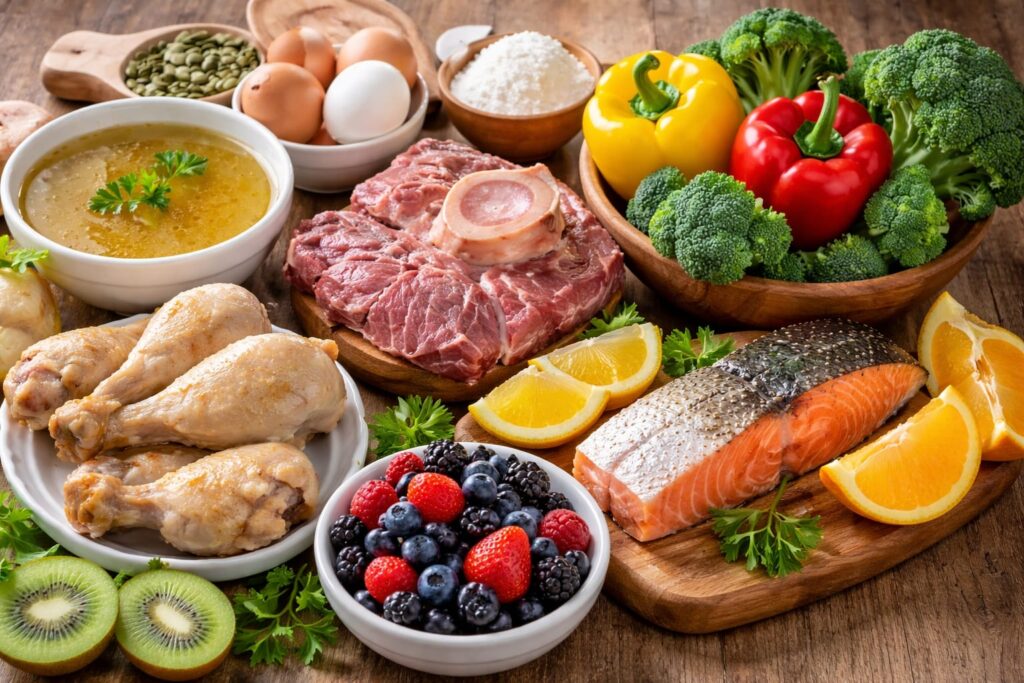
Natural food sources of collagen include:
- Bone broth
- Chicken skin
- Beef tendons and cartilage
- Pork skin
- Fish skin and bones
These foods were more commonly consumed in traditional diets. Today, many people avoid them, which can reduce natural collagen intake.
Marine Sources of Collagen
Fish-derived collagen is especially valued for its high bioavailability. Fish skin, heads, and bones contain collagen peptides that are easier for the body to digest. Marine collagen is often considered lighter and more easily absorbed than other sources.
Collagen What It Is For Foods That Stimulate Production
Plant foods do not contain collagen, but they provide nutrients that support the body’s natural production. For this reason, understanding collagen what it is for foods also involves knowing which nutrients are essential for synthesis.
Vitamin C and Collagen Formation
Vitamin C is required for the formation of stable collagen fibers. Without it, collagen production is impaired.
Foods rich in vitamin C include:
- Citrus fruits
- Kiwi
- Strawberries
- Bell peppers
- Broccoli
Including these foods alongside protein sources supports efficient collagen synthesis.
Minerals and Protein Sources
Minerals such as zinc and copper play a role in collagen metabolism. Eggs, nuts, seeds, legumes, and whole grains help supply these nutrients. Adequate protein intake is also essential, as collagen is built from amino acids.
Collagen, Aging, and Daily Habits
Collagen production begins to decline gradually in early adulthood. Over the years, this affects skin texture, joint comfort, and recovery capacity.
Certain habits accelerate collagen breakdown. Smoking, excessive sun exposure, high sugar intake, and chronic stress all contribute to faster degradation. Protecting collagen therefore involves both nutrition and lifestyle choices.
Sun Exposure and Oxidative Stress
Ultraviolet radiation damages collagen fibers directly. Repeated exposure weakens skin structure over time. Protective habits, such as limiting sun exposure and consuming antioxidant-rich foods, help reduce this damage.
Fruits and vegetables rich in antioxidants support the body’s defenses against oxidative stress.
Sleep and Tissue Repair
Collagen synthesis is closely linked to rest and recovery. During sleep, the body repairs tissues and supports protein production. Poor sleep quality can interfere with these processes, affecting long-term tissue health.
Collagen What It Is For Foods and Supplements
Alongside food sources, collagen supplements are widely used. Most supplements contain hydrolyzed collagen, which is broken down into smaller peptides for easier absorption.
Supplements can be useful when combined with a balanced diet, but they are not a substitute for proper nutrition. Consistency and overall dietary quality remain key factors.
Collagen What It Is For Foods: Common Misconceptions
A frequent misconception is that collagen from food directly turns into skin collagen. In reality, collagen is digested into amino acids, which the body then uses according to its needs.
Another misunderstanding is expecting immediate effects. Changes related to collagen support develop gradually and depend on long-term habits rather than short-term intake.
Practical Nutrition Tips for Supporting Collagen
To support collagen naturally, daily nutrition should focus on:
- Adequate protein intake
- Regular consumption of vitamin C-rich foods
- Sufficient intake of minerals
- Limiting refined sugars and and ultra-processed foods
Understanding collagen what it is for foods helps translate this knowledge into everyday choices.
Collagen What It Is For Foods: Final Considerations
In summary, collagen what it is for foods covers far more than appearance. Collagen supports tissue structure, joint health, digestion, muscle integrity, and healthy aging. While collagen itself comes mainly from animal foods, many plant-based foods are essential for its production.
A balanced diet, combined with healthy daily habits, is the most effective way to support collagen levels over time. Knowing collagen what it is for foods allows for informed decisions that benefit long-term health and overall resilience.